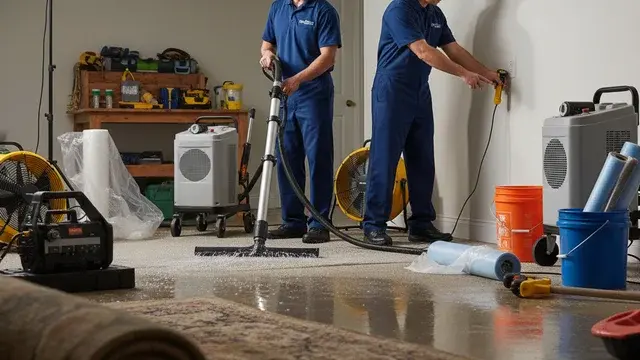
The terms "water damage," "water mitigation," and "water restoration" get used interchangeably, but they actually describe different things. Understanding the difference helps homeowners and business owners know what to expect, what their insurance covers, and how to evaluate quotes. Here is the clear breakdown.
Water Damage — The Event and Its Consequences
"Water damage" describes the problem itself — the event and the resulting physical damage to your property. A burst pipe is water damage. A flooded basement is water damage. A leaking roof is water damage.
When you call your insurance company to open a claim, you report "water damage." It is the shorthand for everything that needs to be addressed.
Water Mitigation — Stopping the Damage
"Water mitigation" is the emergency phase of response. It is everything done to stop the damage from getting worse:
- Water extraction and removal
- Moisture mapping and assessment
- Structural drying with air movers and dehumidifiers
- Antimicrobial treatment to prevent mold
- Removal of non-salvageable materials
- Content pack-out and protection
Water Restoration — Rebuilding What Was Lost
"Water restoration" (sometimes called "reconstruction") is the repair and rebuild phase that happens after mitigation is complete:
- Drywall replacement and finishing
- Flooring installation (carpet, tile, hardwood, LVP)
- Cabinet and trim replacement
- Painting
- Fixture replacement
- Final walk-through and punch list
Why the Distinction Matters
These terms matter because they describe two distinct insurance processes. Mitigation is billed and paid differently from restoration:
- Mitigation bills are often day-rate or line-item based on square footage
- Restoration bills are estimated as standard construction (Xactimate)
- Insurance may approve mitigation quickly but require more review for restoration
- Mitigation may be under one coverage limit, restoration under another
Can One Company Do Both?
Yes, and using one company for both is almost always better for the homeowner or business owner. Single-source companies like Good Fellas Restoration:
- Know the full scope of damage from day one
- Transition from mitigation to restoration without delay
- Provide one point of contact and one insurance file
- Offer one warranty on the completed work
- Coordinate all trades under one contract
When Companies Only Do One or the Other
Some restoration companies do only mitigation. Others do only reconstruction. Working with separate companies usually means:
- Two different estimates to manage
- A handoff delay between phases
- Potential scope gaps or finger-pointing when something is missed
- Two sets of warranties, insurance filings, and invoices
The Timeline Breakdown
A typical residential water damage project breaks down approximately like this:
- Day 1: Emergency response and mitigation begins
- Days 1 to 7: Mitigation phase (extraction, drying, cleanup)
- Days 7 to 14: Insurance approval of restoration scope
- Days 14 to 45: Restoration phase (rebuild)
- Day 45: Final walk-through and closeout
Final Thoughts
Water damage is the event. Mitigation stops it from getting worse. Restoration puts things back together. Good Fellas Restoration handles all three as one coordinated process for Red Oak homes and businesses.