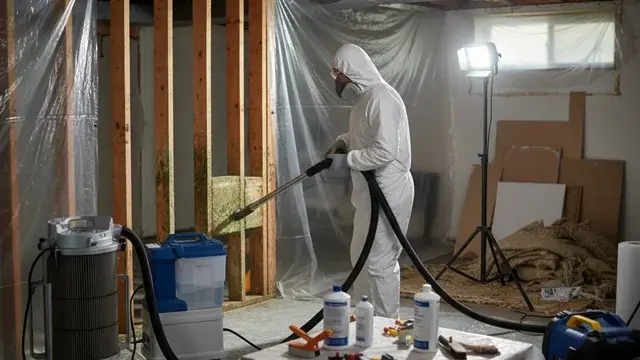
Mold can start growing in as little as 24 hours after a flood. Preventing it is much easier than remediating it. If your Red Oak property has been flooded, here is the step-by-step approach that dramatically reduces your mold risk.
The 72-Hour Window
Mold spores exist everywhere. They become a problem when they find moisture and food — and wet drywall, wet carpet pad, and wet wood framing are all excellent mold food.
In the right conditions (temperature, humidity, food source), mold colonies begin forming within 24 to 48 hours. By 72 hours, visible growth is possible.
This is why the first three days after a flood matter more than the three weeks after. Prevention works. Remediation after colonization is significantly more expensive.
Step 1 — Remove Standing Water Immediately
Standing water is a continuous moisture source. As long as water is on the floor, evaporation is putting moisture into the air faster than any dehumidifier can remove it.
Professional water extraction in the first hours removes most of the water. What remains is in the materials — subfloors, drywall, insulation — and that is what needs aggressive drying.
Step 2 — Remove Saturated Porous Materials
Some materials cannot be dried fast enough to prevent mold. These almost always have to come out:
- Carpet pad (even if the carpet itself can be saved)
- Fiberglass insulation that got wet
- Drywall that soaked up more than a few inches of water
- Particle board and MDF cabinets that absorbed water
- Ceiling tiles
- Wall paneling with paper or cardboard backing
Step 3 — Professional Structural Drying
Home fans and dehumidifiers cannot dry a flooded room fast enough to prevent mold. Professional structural drying uses:
- High-velocity air movers (one per 50 square feet or more)
- Low-grain refrigerant (LGR) dehumidifiers sized for the space
- Daily moisture readings to track progress
- Adjustments to equipment placement as drying happens
Step 4 — Antimicrobial Treatment
After the worst of the moisture is gone, surfaces should be treated with EPA-registered antimicrobials. This kills mold spores before they can colonize.
Not every material needs this treatment — clean water losses with fast drying may not require it. But for flood water, sewage, or slow-response situations, antimicrobial treatment is a core part of prevention.
Step 5 — Verify Drying Is Complete
This is the step amateur cleanup usually skips. Surfaces can look and feel dry while still holding enough moisture to support mold growth.
Professional moisture verification uses meters to confirm every material — drywall, framing, subfloor — has reached appropriate moisture content. Only then is drying actually finished.
Step 6 — Follow-Up Inspection
A few weeks after the flood restoration, a follow-up inspection verifies that no mold has developed. If a problem is going to show up, it will usually do so within 2 to 4 weeks of drying.
Early detection of any residual issue is significantly easier and cheaper to address than mold that has been growing for months.
Why DIY Mold Prevention Usually Fails
Homeowners trying to handle flood cleanup themselves almost always run into the same three problems:
- Not enough drying power to dry quickly (residential fans do not equal commercial air movers)
- Not enough dehumidification (regular dehumidifiers cannot keep up with a flooded room)
- Skipped antimicrobial treatment because the product is harder to source
Final Thoughts
Mold prevention is 90% about speed. Fast extraction, fast drying, antimicrobial treatment, and verification — done in the first 72 hours — dramatically reduces your risk. If you have had flooding in Red Oak, TX, call Good Fellas Restoration immediately for professional mold prevention as part of your flood response.