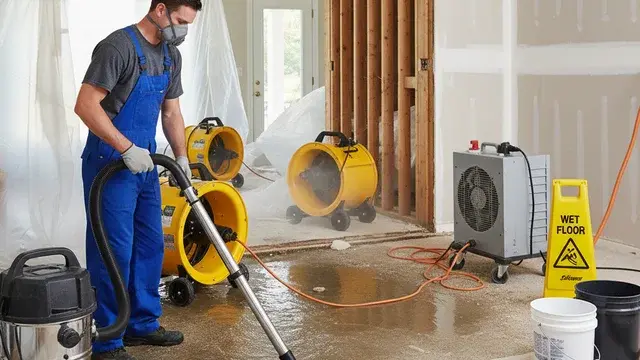
When professional restoration technicians arrive after water damage, you will see them set up what looks like a lot of equipment and then... wait. That waiting period — structural drying — is actually where most of the restoration work happens. Here is what is really going on during those 3 to 7 days of drying.
What Structural Drying Actually Is
Structural drying is the controlled removal of moisture from building materials (framing, subfloor, drywall) and the air inside the affected space. It is not about drying the obvious wet spots. It is about bringing every material down to appropriate moisture content before closing up the project.
Done right, structural drying prevents mold, stops damage from progressing, and saves materials that would otherwise have to be replaced. Done wrong, materials look dry on the surface while holding moisture inside — a recipe for hidden mold and failed repairs.
The Three Tools of Drying
Professional structural drying uses three tools in combination:
- Air movers that push air across wet surfaces
- Dehumidifiers that remove moisture from the air
- Heat that increases evaporation rates
How Air Movers Work
Air movers are high-velocity fans designed to push air across a surface. When air moves across wet materials, it speeds up evaporation — molecules of water leave the material and enter the air.
IICRC standards specify one air mover per 50 to 150 square feet depending on the situation. They are placed at specific angles to maximize airflow across wet materials.
How Dehumidifiers Work
As air movers push moisture into the air, the air in the room becomes humid. If left alone, this humid air would just move the moisture from one place to another — from the floor to the walls, for example.
Dehumidifiers pull the humid air in, remove the water, and send dry air back out. The water is drained or collected. This cycle continues until the air is dry and all materials follow.
Professional restoration dehumidifiers are called LGR (low-grain refrigerant) units. They remove dramatically more water per day than residential dehumidifiers — often 100 to 200 pints per day per unit.
Why Heat Matters
Warm air holds more moisture than cold air. This means warm air-moving across wet surfaces picks up water faster, and warm air can be dried more efficiently by a dehumidifier.
Professional drying often includes supplemental heat, especially for cold-weather drying or hard-to-dry materials like hardwood floors.
Why Drying Takes Days
Two things slow the process even with professional equipment:
- Materials release moisture slowly — water inside a 2x4 stud takes days to evaporate, not hours
- Wet cavities are not directly accessible — moisture inside wall cavities or under flooring has to migrate outward before it can evaporate
How Progress Is Measured
Professional drying is measured objectively with moisture meters:
- Pin meters read moisture content inside wood and drywall
- Pinless meters read moisture levels without damaging the material
- Thermo-hygrometers track air temperature and relative humidity
- Readings are documented daily to show progress
When Drying Is Finished
Drying is complete when materials reach appropriate dry standards. These standards vary by material:
- Drywall: typically 15% to 17% moisture content or lower
- Softwood framing: 15% to 18%
- Hardwood flooring: within 4% of local conditioning moisture content
- Concrete subfloor: dry enough by relative humidity standards (not absolute moisture)
Final Thoughts
Structural drying looks simple from the outside, but the science and measurement behind it are what make restoration work. Good Fellas Restoration uses IICRC-compliant drying protocols on every project in Red Oak, TX — because shortcuts in drying are the single biggest cause of failed restoration work.