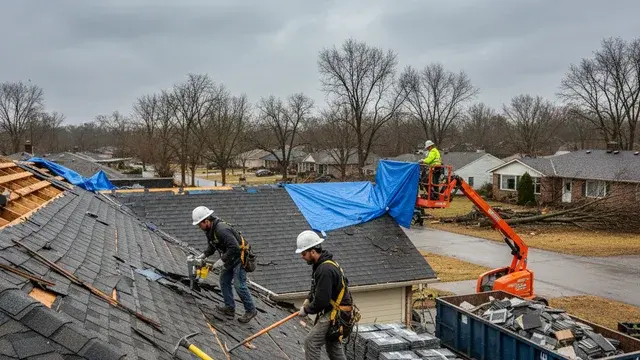
After a fire, storm, or break-in, one of the most important — and most overlooked — services is emergency board-up and roof tarping. These are temporary measures that secure your property before permanent repairs can be made. Here is why they matter more than most homeowners realize.
The Problem of Secondary Damage
A property damaged by fire, storm, or break-in is vulnerable. An unsecured building can suffer additional damage from rain, wind, animals, and intrusion — damage that would not have happened if the initial damage had been secured quickly.
This secondary damage is often not covered by insurance because it could have been prevented by reasonable emergency measures. That is why emergency board-up and tarping are universally covered — insurance companies know that not doing them costs more.
What Board-Up Does
Emergency board-up secures openings in the building:
- Broken windows covered with plywood panels
- Damaged doors replaced with solid plywood
- Wall breaches from impact or fire sealed
- Skylights and other openings covered
What Roof Tarping Does
Roof tarping covers damaged roof areas until permanent repairs can be made:
- Heavy-duty polyethylene tarps secured to undamaged roof deck
- Sealed edges prevent water intrusion during rain
- Tarping holds up for 30 to 90 days in most conditions
- Installed at the correct pitch to shed water
When Board-Up and Tarping Are Needed
Common situations requiring emergency board-up and tarping:
- After a house fire with broken windows or damaged roof
- Storm damage with missing shingles or broken openings
- Hail damage that penetrated the roof deck
- Wind damage to walls, fencing, or structural openings
- Break-ins leaving doors or windows unsecured
- Vehicle impact damage
Speed Matters
The longer a property is unsecured, the higher the risk of secondary damage. Good Fellas Restoration dispatches 24/7 for emergency board-up and tarping because:
- Next rain can flood the interior
- Unsecured property attracts looters and vandals
- Animals nest in openings quickly
- Exposed interior continues to deteriorate
- Insurance may not cover damage from delayed action
Professional vs DIY
Homeowners sometimes attempt DIY board-up or tarping. Professional work is better because:
- Professional-grade plywood thickness and hardware
- Correct tarping technique with sealed edges
- Safety during work at height
- Proper documentation for insurance
- Work holds up until permanent repairs
- No cost to homeowner when covered by insurance
Insurance and Emergency Services
Emergency board-up and tarping are almost universally covered by:
- Standard homeowners insurance policies
- Commercial property policies
- Rental property landlord policies
- Multifamily and condo master policies
Final Thoughts
Emergency board-up and tarping are small steps that prevent big secondary damages. When your property is compromised, Good Fellas Restoration responds 24/7 across Red Oak, TX with professional emergency services.