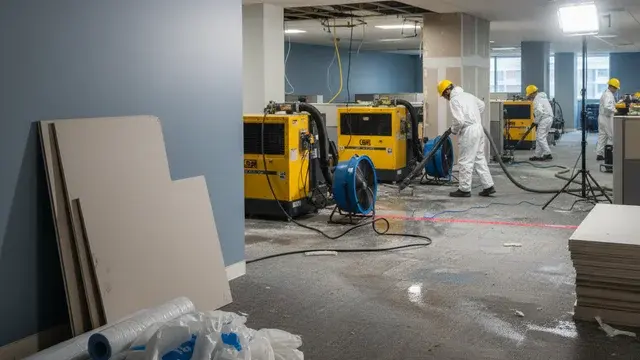
When water damage hits a commercial property, the stakes are higher than in a typical residential event. Business interruption, tenant impact, regulatory documentation, and larger claim amounts all have to be managed alongside the physical cleanup. This checklist walks through the right response for business owners and property managers in Red Oak, TX.
Step 1 — Ensure Safety
Before anything else, make sure the property is safe for occupants and staff.
- Evacuate affected areas if water level or electrical hazards require it
- Shut off power to affected areas from the panel if safe
- Turn off HVAC to prevent spreading contaminants
- Post "Do Not Enter" signs on unsafe areas
- Account for all staff, customers, and visitors
Step 2 — Stop the Water Source
Find and stop the water source. In commercial properties, this is often more complex than residential:
- Identify the main water shut-off for the building
- For multi-tenant properties, identify the zone shut-off
- Call your plumber or emergency maintenance contact
- For sprinkler system activation, contact the fire monitoring company
Step 3 — Notify Key Stakeholders
Commercial water damage affects multiple parties who need to know immediately:
- Building owner or ownership group
- Property management company
- Insurance carrier (both property and business interruption)
- Affected tenants
- Legal counsel for regulated industries (healthcare, food service)
Step 4 — Document Before Cleanup
Commercial claims require more documentation than residential. Before any cleanup:
- Photograph every affected area thoroughly
- Video walk-through of the property
- Document the water source
- Note the time and circumstances of the event
- List affected equipment, inventory, and fixtures
- Preserve any evidence of the cause
Step 5 — Call a Commercial Restoration Company
Call a restoration company experienced with commercial losses. For Red Oak and surrounding cities, Good Fellas Restoration provides 24/7 commercial response.
Commercial restoration is different from residential. The scale of equipment, the documentation requirements, the need to work around operations, and the insurance process all require commercial experience.
Step 6 — Protect What You Can
While waiting for the restoration team:
- Move valuable equipment and documents to dry areas
- Cover electronics that cannot be moved
- Secure confidential records
- Restrict access to affected areas
- Begin tenant communication if applicable
Step 7 — Plan Business Continuity
Depending on the scope of the damage, business continuity planning may be needed:
- Identify temporary workspace or alternate locations
- Communicate with customers and clients
- Document lost revenue and extra expenses for the business interruption claim
- Coordinate with employees on schedules
- Notify regulatory authorities if required by industry
Step 8 — Manage the Insurance Process
Commercial insurance claims involve more sub-claims than residential:
- Building property claim
- Contents and inventory claim
- Business interruption (lost income)
- Extra expense coverage
- Tenant improvements (for leased spaces)
Common Mistakes to Avoid
Mistakes that cost commercial property owners and managers:
- Waiting too long to start mitigation hoping to assess the damage first
- Not documenting before cleanup begins
- Allowing tenants or customers into unsafe areas
- Throwing away damaged items before inventory
- Not calling the insurance company within the required window
- Hiring multiple contractors for different phases
Final Thoughts
A documented commercial water damage response plan keeps the chaos manageable. Speed, documentation, and professional restoration are the three things that determine whether a water event becomes a short interruption or a long shutdown. For commercial water damage in Red Oak, TX, call Good Fellas Restoration 24/7.